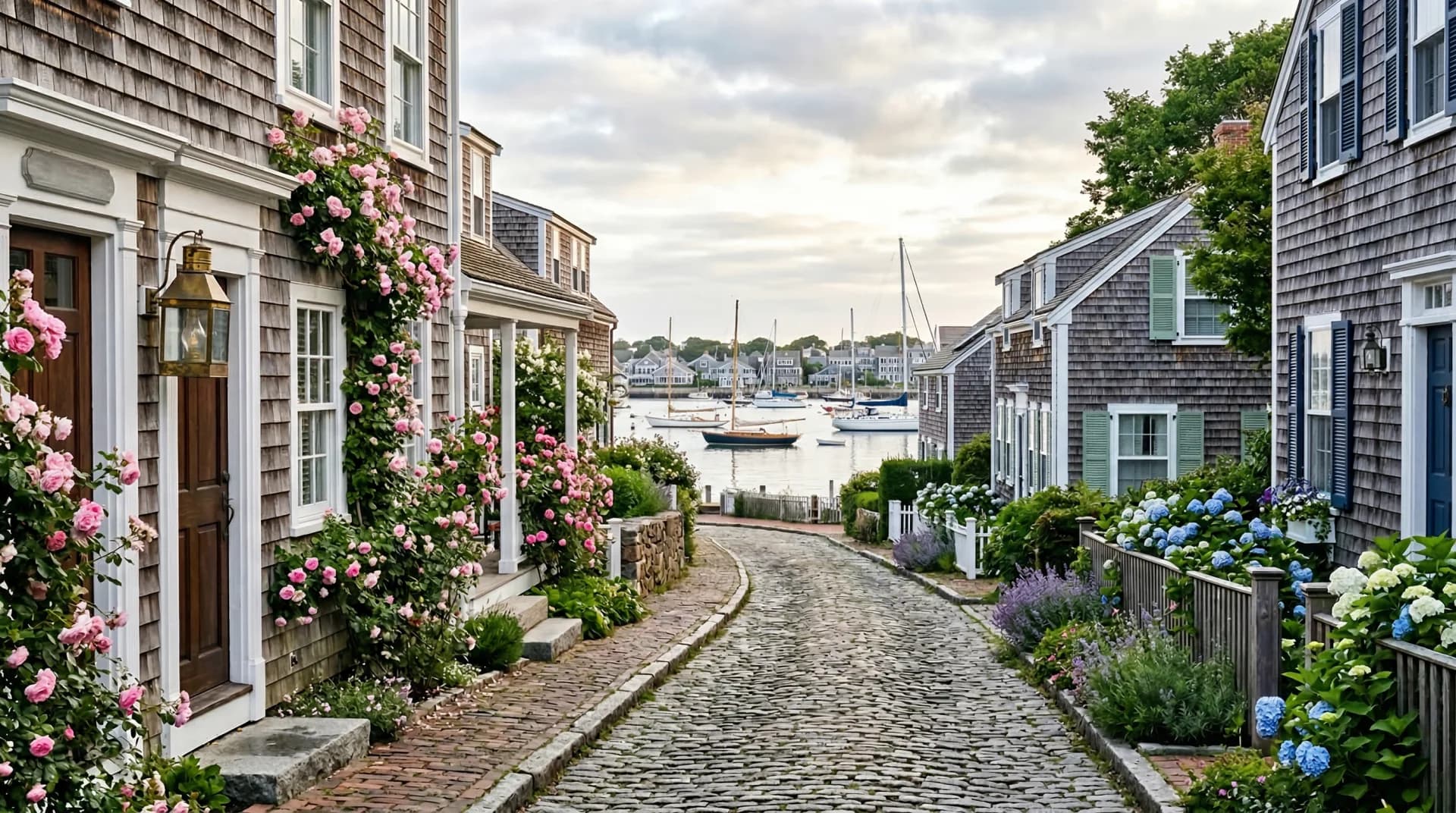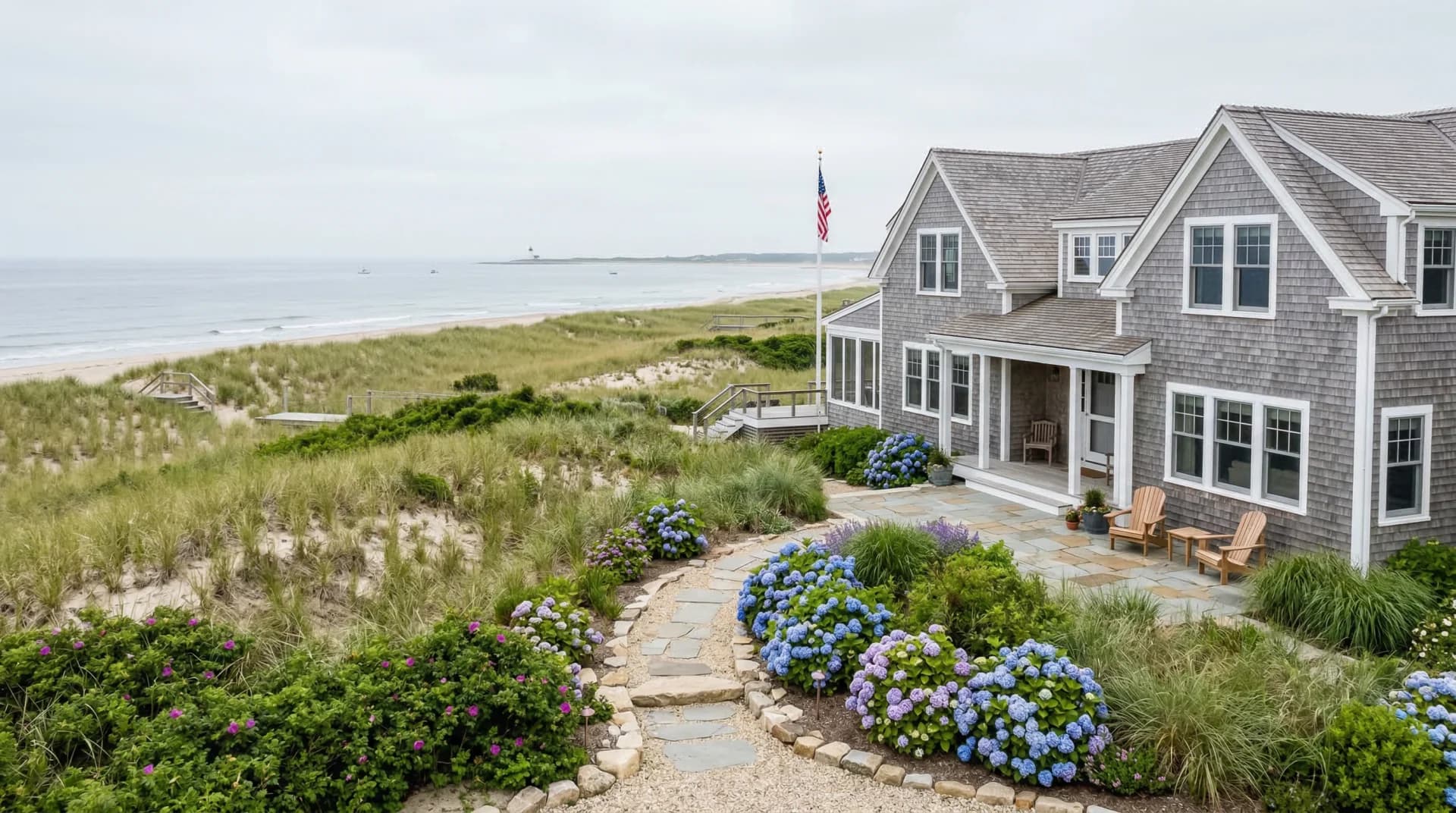
Cape Cod’s luxury inventory orbits water — Sound versus ocean, tidal cove versus deep-water mooring — with a summer social economy that still respects the offseason’s quieter economics.
Market Overview
Cape Cod is not a single market. Saltwater exposure, flood zones, septic suitability, and dock permitting vary town-by-town faster than most buyers track. The “Cape house” label obscures material price deltas between a Sound sunset porch and an oceanfront erosion envelope.
Regional context
Cape Cod is coextensive with Barnstable County — fifteen New England towns running from Woods Hole and Falmouth in the southwest to Provincetown at the outer tip. The Cape Cod Canal (since 1914) separates most of the peninsula from the mainland; Sagamore and Bourne bridges are the primary access choke points summer Fridays know too well. Physically, the Cape reaches roughly sixty-five miles into the Atlantic with more than four hundred miles of shoreline, bounded by Cape Cod Bay, Buzzards Bay, and Nantucket Sound. Cape Cod and the Islands — the Cape plus Nantucket and Martha’s Vineyard — functions as a single summer-colony macro-region in the luxury imagination even though each island and town trades on its own regulation and waterfront supply.
Lifestyle & Culture
Lobster rolls as cliché, yes — but also sailing calendars, artist colonies on the Outer Cape, and a philanthropic season that concentrates in eight weeks. Buyers either design for that compression or buy far enough out to ignore it.
Buyer Notes
FEMA flood insurance, CBRA overlays, and storm-surge modeling belong in week-one diligence, not week-six surprises. Short-term rental ordinances tightened in several towns — verify registration caps before underwriting income.