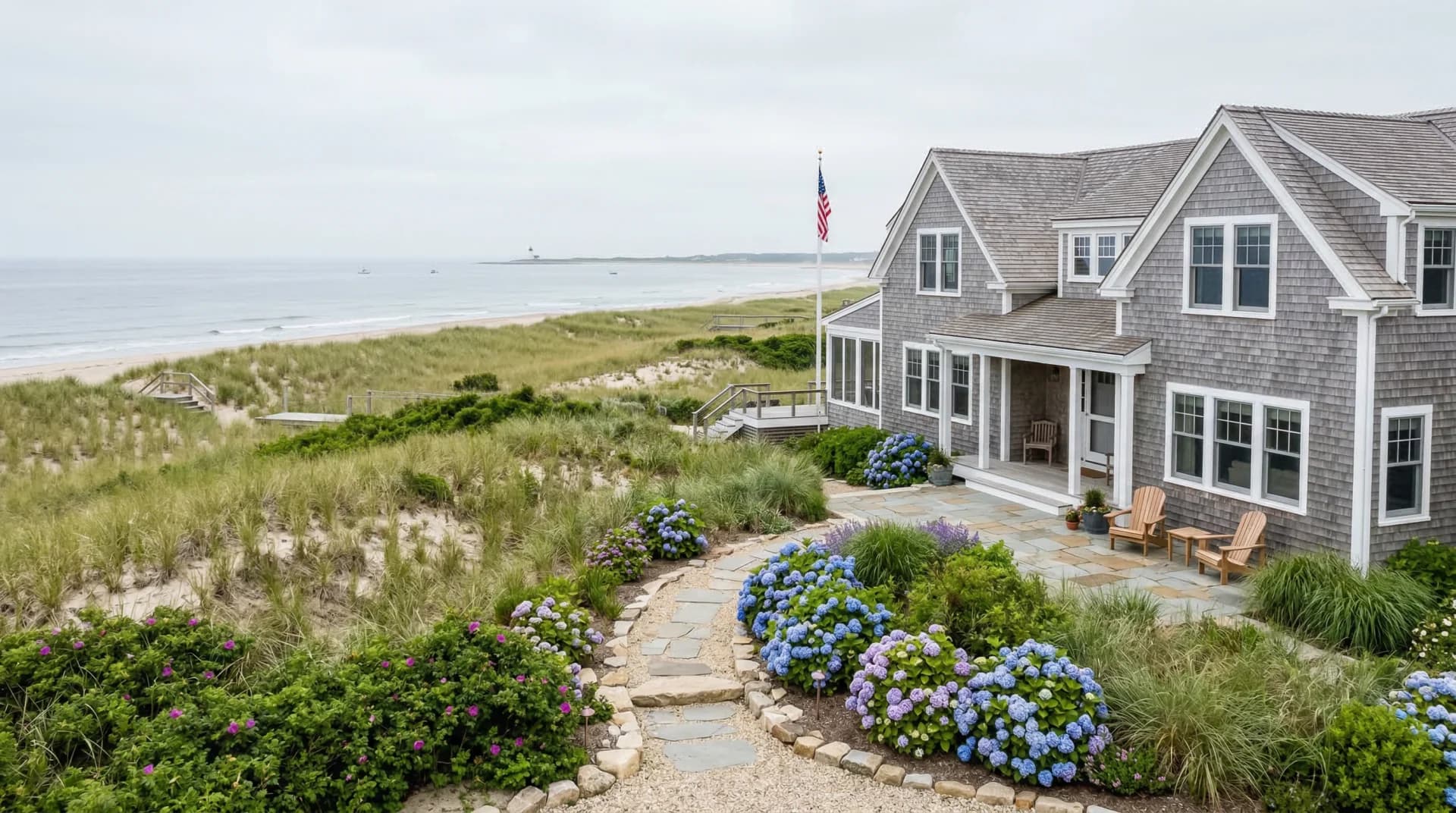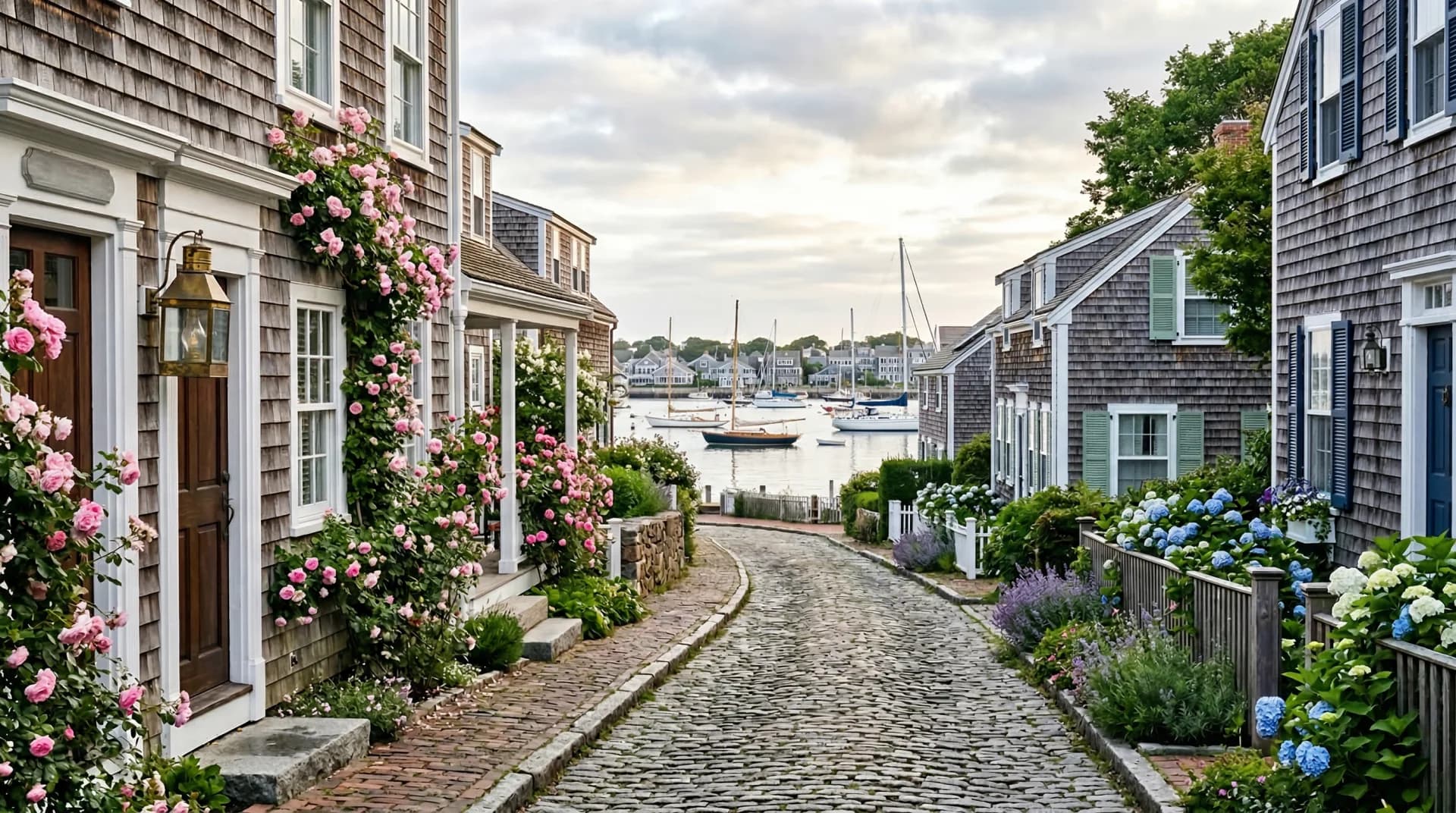
Nantucket’s luxury market runs on ferry-and-flight logistics, finite land, and a social density that rewards insiders — grey-shingle vernacular, mooring priorities, and July weeks that price like liquid assets.
Market Overview
Island markets punish casual comps. A Surfside contemporary and a ‘Sconset historic renovation can both trade above coastal Massachusetts medians for opposing reasons — one for cash-flow rental math, the other for irreplaceable envelope and proximity to the Bluff.
Regional context
Nantucket lies about thirty miles south of the Cape Cod peninsula, with the town-and-county government merged into a single consolidated jurisdiction covering Nantucket, Tuckernuck, and Muskeget. The island’s National Historic Landmark District designation (1966) reflects an unusually intact 18th–19th century New England seaport streetscape — grey-shingle architecture, tight lanes, and harbor civic life that the National Park Service cites as among the best surviving examples of the type. Seasonal expansion is part of the island’s economic DNA: published estimates note summer populations an order of magnitude above the year-round census baseline, which is why service access, moorings, ferry reservations, and trades scheduling show up in real estate negotiations as often as price per square foot.
Lifestyle & Culture
Harbor festivals, nonprofit galas, and a club ecosystem that still runs on paper invitations more than feeds. Buyers who want anonymity and buyers who want insertion into island society need different streets — we map that before first showings.
Buyer Notes
Waterfront engineering, erosion setbacks, and HDC review for visible alterations are non-optional conversations. Ferry reservations and freight logistics affect renovation timelines; budget calendar slack. Mooring assignments are social-capital adjacent — ask early if boating is core to the purchase thesis.