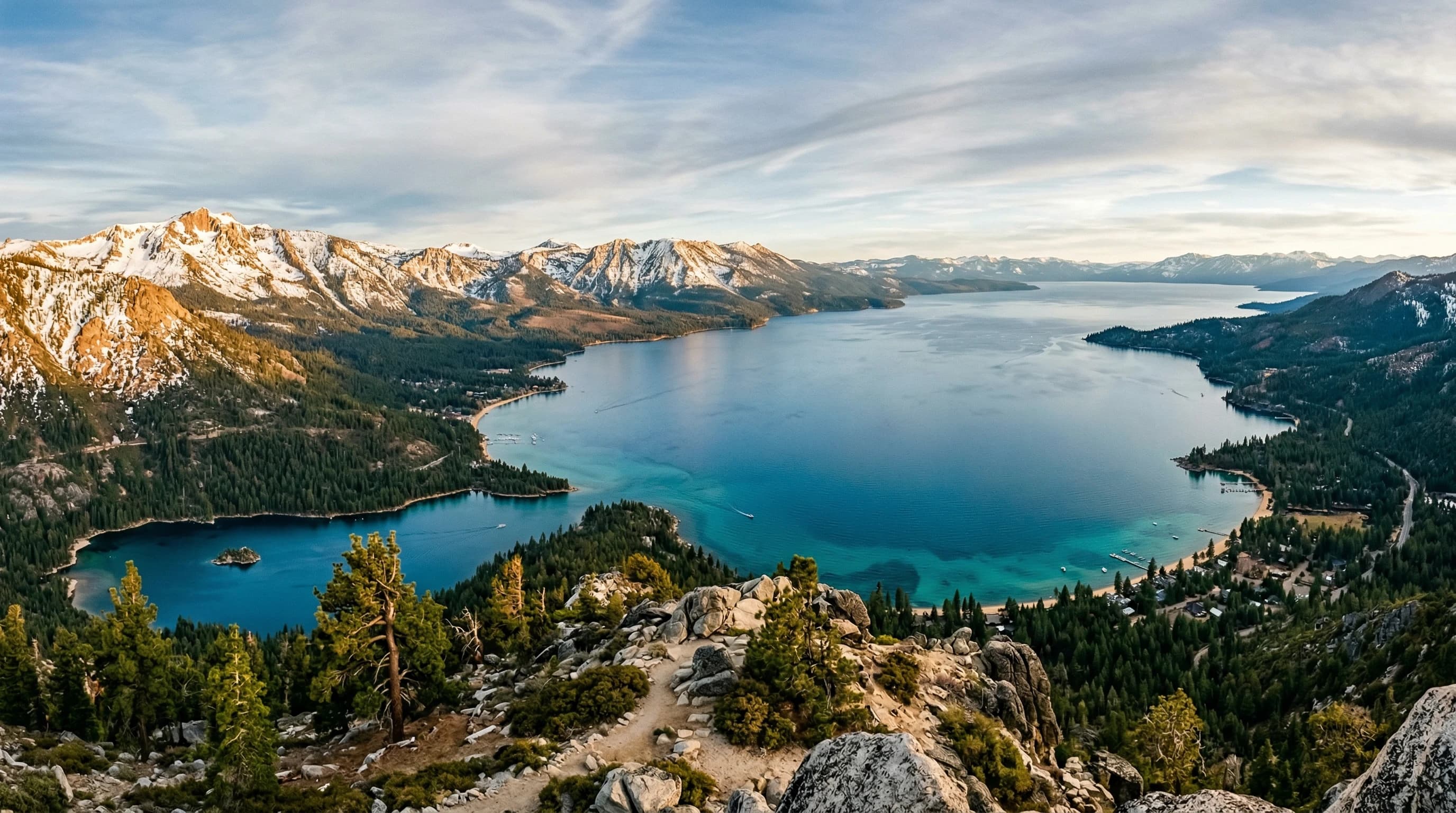
Straddling the California–Nevada border at 6,200 feet, Lake Tahoe offers what no other American resort market can — world-class skiing and pristine lakefront living within a three-hour drive of the San Francisco Bay Area. The post-pandemic migration transformed this seasonal escape into a year-round luxury destination with intensifying competition for waterfront properties.
Market Overview
Lake Tahoe occupies a singular position in American luxury real estate. No other market offers the combination of a crystal-clear alpine lake (the largest in North America by volume), world-class ski resorts, and proximity to a major tech-driven metro area. It is, quite literally, the San Francisco Bay Area's backyard playground — and since 2020, increasingly its satellite office.
The pandemic-era migration fundamentally restructured this market. What had been a weekend-and-holiday destination became a primary-residence option for Bay Area tech professionals, and many never left. The result: a luxury market that appreciated 40%+ between 2020 and 2023, followed by a stabilization phase that has settled into steady 4–5% annual growth.
Inventory remains the market's defining constraint. Tahoe's geography — the lake surrounded by National Forest land and basin preservation zones — physically limits buildable lots. There will never be enough lakefront property to meet demand, making waterfront holdings function more like blue-chip equities than traditional real estate.
Lifestyle & Culture
Seasons & Outdoors
Tahoe's four seasons are its defining asset. Winters deliver 300+ inches of snow at summit elevation across 15 ski resorts — Palisades Tahoe, Northstar, Heavenly, and Kirkwood are the marquee names. Cross-country skiing, snowshoeing, and backcountry touring expand the winter palette.
Summers transform the lake into a freshwater Mediterranean. Water clarity averages 60+ feet, supporting paddleboarding, kayaking, sailing, and swimming from June through September. The Tahoe Rim Trail (165 miles circumnavigating the lake) and the Pacific Crest Trail offer world-class hiking. Mountain biking at Northstar and Downieville draws riders internationally.
Fall brings golden aspens and uncrowded trails — many locals cite October as the best month at the lake.
Dining & Culture
The culinary scene has matured dramatically. Martis Camp's chef program brings Michelin talent to the mountains. Moody's Bistro (Truckee), Wolfdale's (Tahoe City), and the restaurants at Edgewood anchor a dining tier that rivals destination cities. The Tahoe Film Festival, Lake Tahoe Music Festival, and a growing gallery scene along the North Shore add cultural depth.
Wellness & Nature
The lake itself is the wellness amenity. Clean alpine air at 6,200+ feet, pristine water, and the psychological benefit of daily mountain-and-lake views create a health environment that's impossible to replicate. Forest bathing, hot springs (Sierra Hot Springs, 45 minutes north), and the growing concentration of wellness practitioners in Truckee and Tahoe City formalize what the landscape provides naturally.
Buyer Profile
Who's Buying
Lake Tahoe luxury buyers fall into two primary categories:
- The Bay Area Tech Professional (35–55, $1M+ household income) — Originally bought or rented during the pandemic. Many have converted to primary residence or 50/50 split with San Francisco. Concentrated in Incline Village, Truckee, and Tahoe City. Values proximity to Bay Area (3-hour drive, 30-minute flight to Truckee-Tahoe Airport).
- The Legacy Buyer (50–70, $3M+ net worth) — Families who've vacationed at Tahoe for generations and are upgrading to lakefront or acquiring property for multi-generational use. Often purchasing in the $3M–$10M range on the West Shore or in Glenbrook.
Feeder Markets
- San Francisco / Bay Area — Accounts for an estimated 55–60% of luxury purchases. The I-80 corridor and daily Alaska/United flights make Tahoe the Bay Area's mountain extension.
- Sacramento — 90-minute drive. Government professionals and healthcare executives increasingly competing in the $1M–$2M segment.
- Los Angeles — Growing segment, particularly for second homes. The Tahoe brand resonates with LA buyers seeking a cooler-climate counterpoint.
- Reno — A 30-minute drive from Incline Village. Reno's tech-sector growth (Tesla Gigafactory, Switch, Apple data center) has expanded the local buyer pool.
Tax Considerations
The California–Nevada state line runs through the lake, creating a significant tax arbitrage. Nevada imposes no state income tax, which for high-income Bay Area buyers can represent $200K–$500K+ in annual savings. This is the primary driver of Incline Village's outsized demand relative to California-side communities of similar quality.
Market Trends
The Tahoe luxury market's post-pandemic normalization is complete, and the structural story is compelling:
- Lakefront inventory is at historic lows. Fewer than 20 direct lakefront properties are typically available basin-wide at any given time, down from 40–50 pre-pandemic. Prices for true lakefront have not retreated.
- Incline Village continues to command a premium that widens annually, driven by Nevada tax advantages and the concentration of recent infrastructure investment (new park, Parasol community center).
- Truckee/Martis Camp represents the best growth story. Newer construction, strong community amenities, and a town center that's matured significantly since 2020.
- Short-term rental regulations are tightening across the basin. El Dorado County (South Shore) and Placer County (North Shore) have both implemented permit caps and enhanced enforcement, which constrains rental supply but supports property values for permit holders.
The fundamental supply constraint — a lake surrounded by National Forest, with no new lakefront to create — ensures that well-positioned Tahoe luxury properties will continue to appreciate as a scarce, irreplaceable asset class.