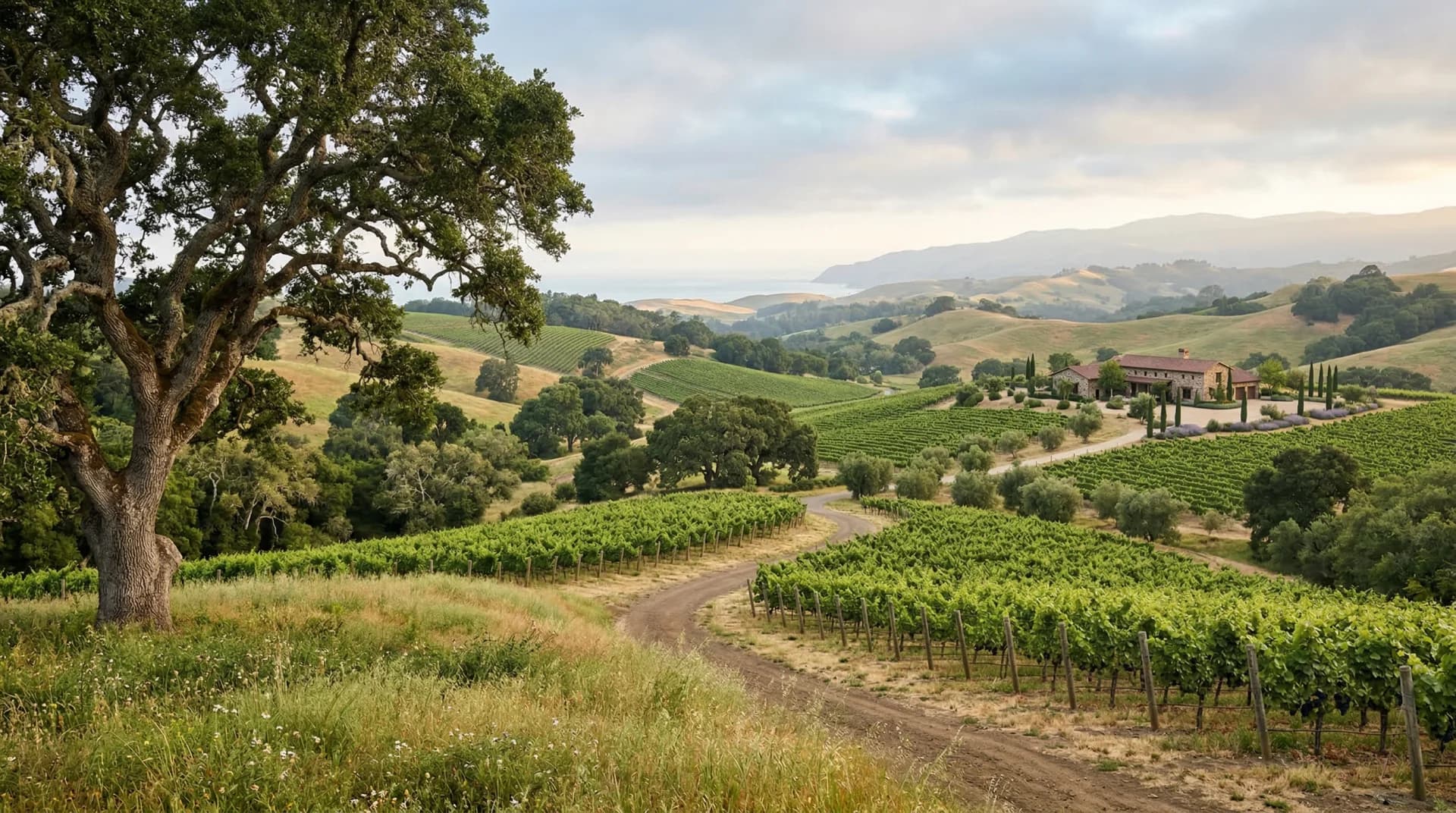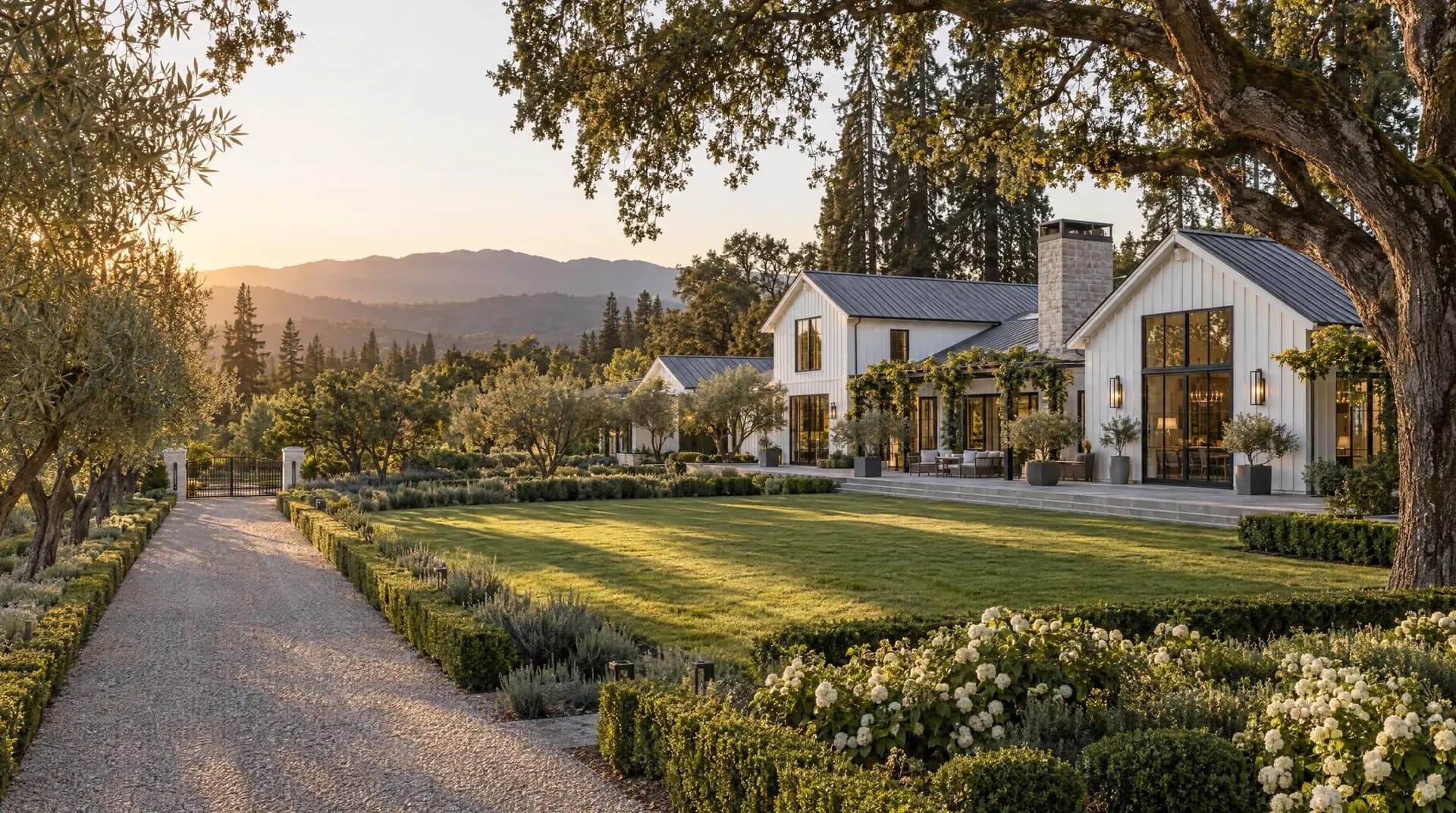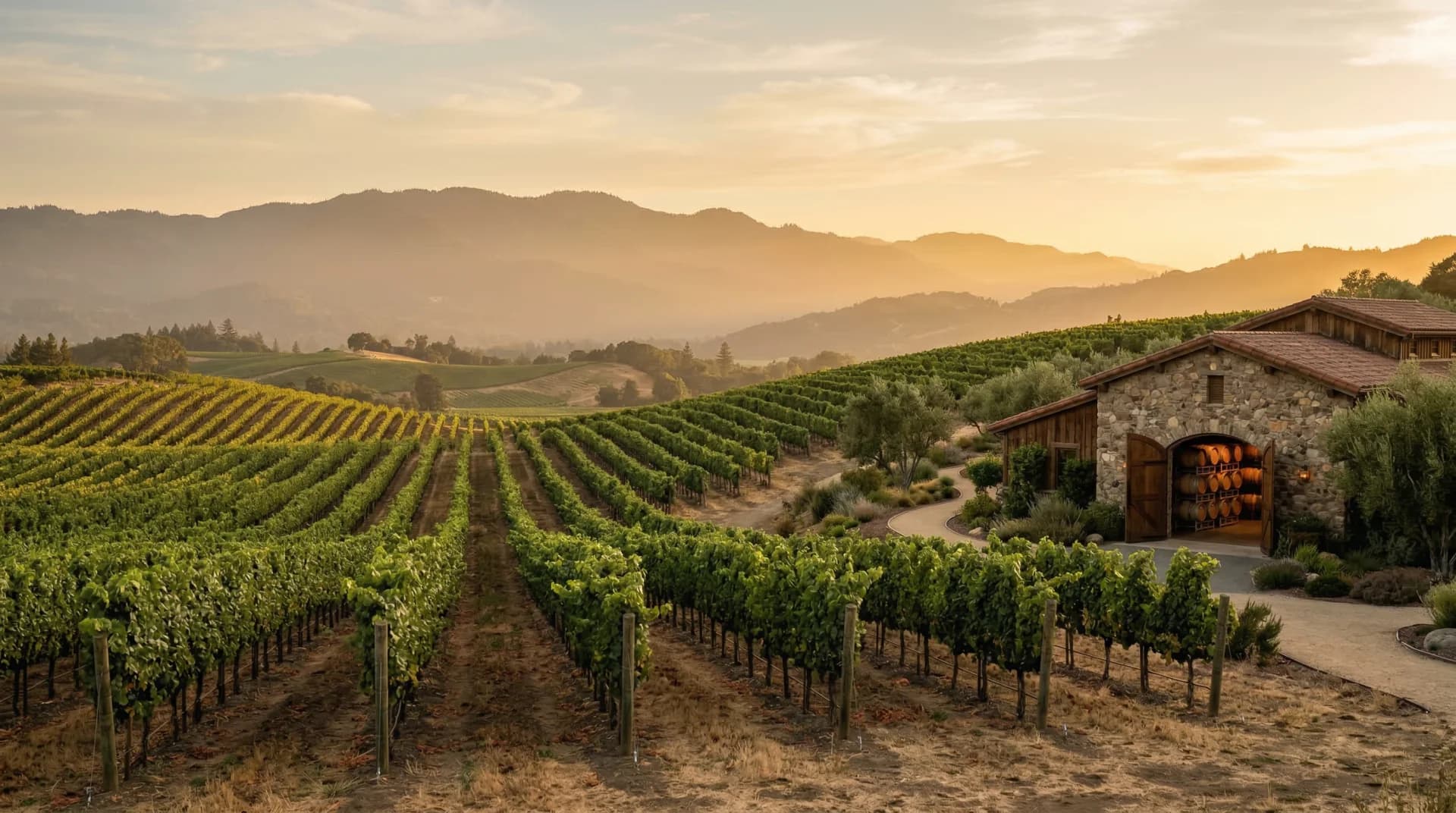
Napa Valley remains one of California’s defining luxury second-home markets — where vineyard-adjacent estates, hillside architecture, and Calistoga-to-Oakville scarcity continue to attract Bay Area and international buyers seeking permanence, not just weekends.
Market Overview
Napa’s luxury segment is not interchangeable with broader Northern California housing. Inventory clusters around finite geographic envelopes — valley floor vineyard buffers, ridgeline view planes, and a handful of enclaves where HOA and ag zoning quietly govern what can be built. Buyers here are typically optimizing for privacy, provenance of land, and proximity to the valley’s operational wine economy, not generic square footage.
Regional context
Napa County sits north of San Pablo Bay as one of four North Bay counties and is folded into the wider San Jose–San Francisco–Oakland combined statistical area — meaning feeder wealth from the Bay Area tech and finance economy is structurally wired into demand. The county’s modern identity is inseparable from the Napa Valley AVA: local wineries such as Stag’s Leap Wine Cellars and Chateau Montelena put the region on the world map after the 1976 Judgment of Paris. Today that legacy supports a dense hospitality layer (tasting rooms, chef-led dining, wellness travel) that underpins real estate preference far beyond “a house near grapes.”
Lifestyle & Culture
World-class dining (French Laundry lineage and its successors), private cellar culture, and a calendar driven by blending seasons and barrel tastings define the social rhythm. Outdoor life runs through cycling on Silverado Trail, hot springs in Calistoga, and quick escapes to Sonoma County’s coast when the valley feels too warm.
Buyer Notes
Water, vineyard permits, Williamson Act contracts, and wildfire defense requirements materially affect usability and carry cost. We recommend early outreach to land-use counsel for any parcel over a few acres. For primary-secondary hybrids, weigh airport access through Oakland, SFO, and Charles M. Schulz depending on your typical arrival corridor.