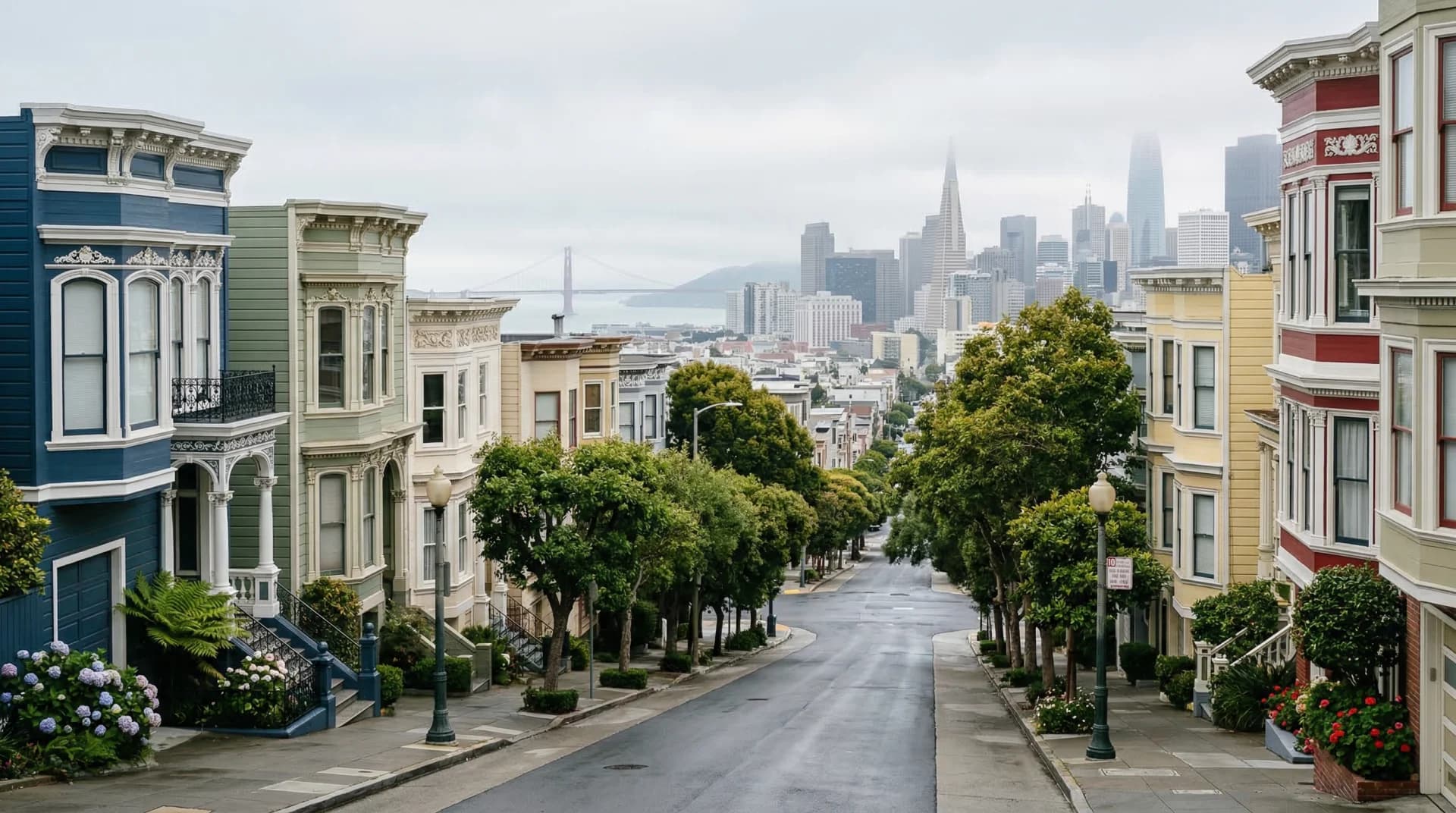
San Francisco’s luxury market remains one of America’s most structurally supply-constrained — Victorian flats, mid-rise view condos, and trophy single-families each trade on micro-location premiums that outsiders consistently underestimate.
Market Overview
Pricing San Francisco property without block-level context produces errors. Hills cast shadow patterns that alter perceived value at the same elevation; HOA reserves and seismic retrofit assessments move deals in ways suburb-only buyers do not expect.
Regional context
San Francisco is both a consolidated city and county — the smallest county in California by land area — occupying the tip of the San Francisco Peninsula with roughly 47 square miles of intensely programmed urban fabric bounded by the Pacific and the Bay. That geographic cap means every neighborhood competes for finite land; “location” is not a marketing word here but a pricing dial measured in block-by-block sun, wind, outlook, and walk-to-amenity friction. The city feeds the broader Bay Area ecosystem (Peninsula tech corridors, East Bay spillover, North Bay weekenders) while maintaining its own trophy-tier sub-markets for view condominiums, Victorian singles, and full-service high-rises.
Lifestyle & Culture
Michelin-density dining, SFMOMA-level arts, private school corridors, and Oracle Park / Chase Center adjacency for different buyer tribes. Many resort-market clients maintain a San Francisco primary and expand outward — we coordinate that handoff carefully.
Buyer Notes
Transfer taxes, TIC financing, tenancy-in-common conversions, rent control overlays, and soft-story ordinances each require specialist review. Expect longer due diligence on title for older buildings. For view purchases, insist on sight-line easement checks — future construction can reprice your outlook silently.