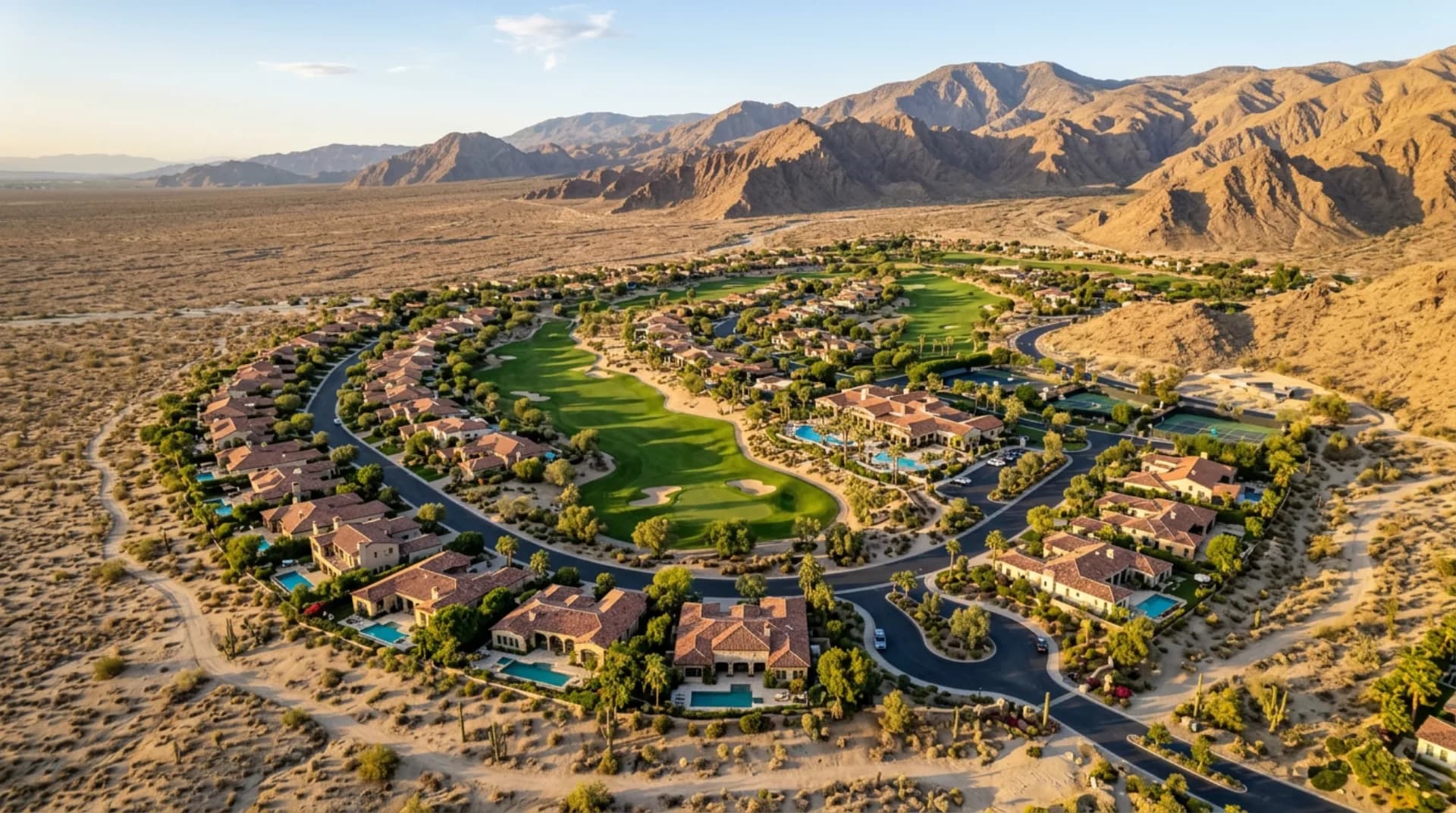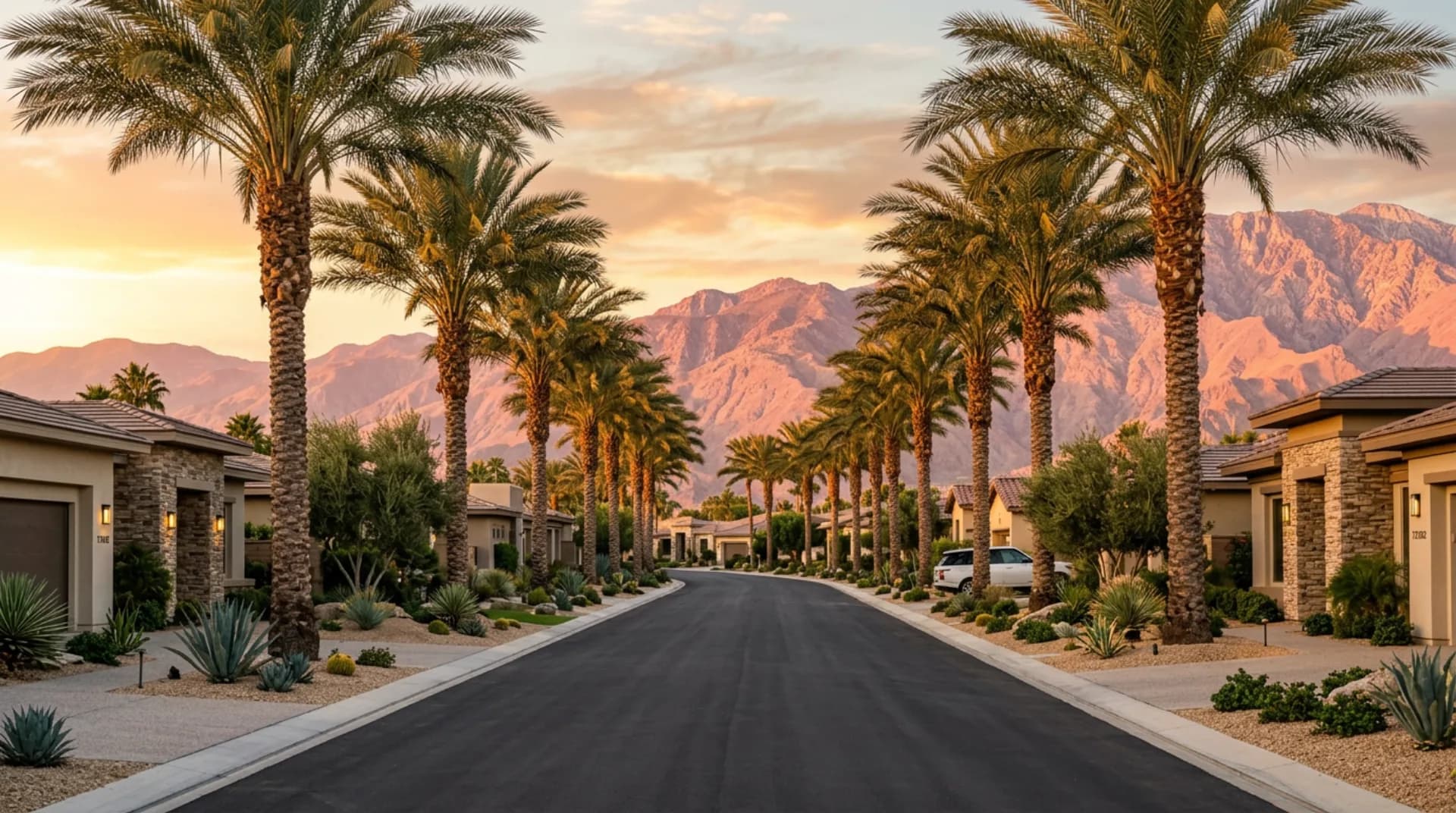
The Coachella Valley has evolved from a Hollywood hideaway into one of America's most sought-after luxury markets — where mid-century architecture meets desert grandeur, and average sale prices surpassing $1M put world-class resort living within reach of discerning buyers from Los Angeles, San Francisco, and beyond.
Market Overview
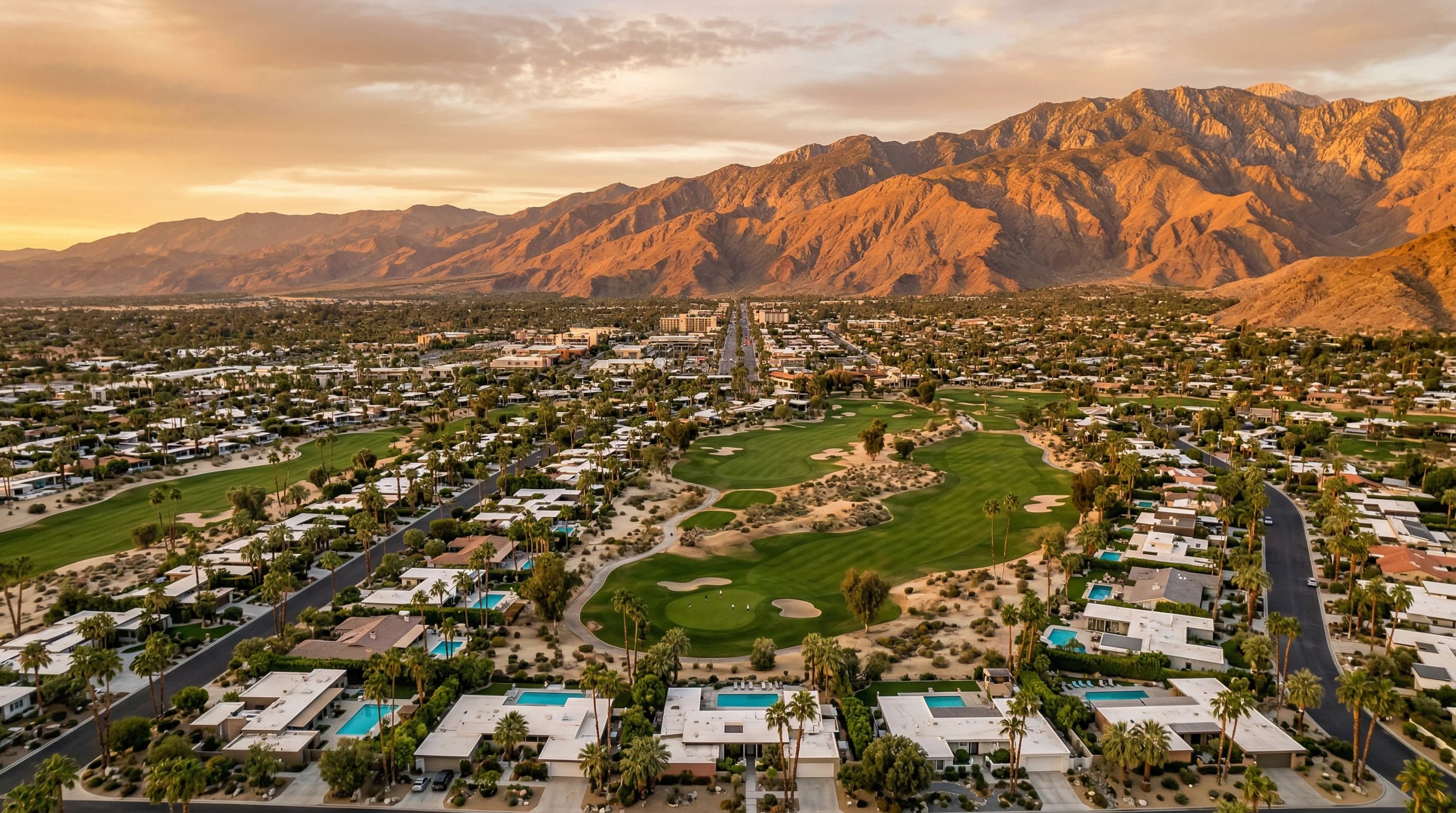
The Greater Palm Springs area — spanning nine cities across the Coachella Valley — has quietly become one of the West Coast's most dynamic luxury real estate markets. What was once a weekend escape for Golden Age Hollywood has matured into a year-round destination for buyers seeking architectural distinction, world-class golf, and a lifestyle calibrated around outdoor living.
The market has seen steady appreciation through 2024 and into 2025, driven by remote work migration, California tax-flight from coastal metros, and a generational shift in how buyers define luxury. Unlike traditional resort markets that crater in off-seasons, Palm Springs maintains year-round demand thanks to its festival economy (Coachella, Modernism Week, the BNP Paribas Open) and a growing permanent-resident population.
Cash transactions account for nearly half of all luxury sales — a signal of buyer confidence and the market's appeal to wealth that doesn't need financing.
Lifestyle & Culture
Climate & Outdoors
The Coachella Valley averages 350 days of sunshine annually. Winters are the prime season — daily highs around 70–75°F from November through March make it ideal for outdoor living. Summers push past 110°F, creating a natural "reverse season" where permanent residents take advantage of lower prices and quieter streets.
Hiking trails through the San Jacinto Mountains (accessible via the Palm Springs Aerial Tramway — a 2.5-mile ride from desert floor to 8,500 feet), Joshua Tree National Park (45 minutes east), and the Indian Canyons offer year-round outdoor access. Golf dominates the lifestyle: the valley hosts over 120 courses, more per capita than anywhere in the world.
Dining & Arts
Downtown Palm Springs has experienced a restaurant renaissance, with chef-driven concepts alongside legacy establishments. The Design District and Uptown Palm Springs corridor are walkable dining and gallery destinations. Key cultural anchors include the Palm Springs Art Museum, Modernism Week (February), and the Palm Springs International Film Festival.
Wellness
The valley has become a wellness destination, with destination spas at Two Bunch Palms, The Ritz-Carlton Rancho Mirage, and a growing network of boutique wellness studios. The mineral hot springs that first drew visitors in the early 1900s remain a draw.
Buyer Profile
Who's Buying
The typical luxury buyer in the Coachella Valley is purchasing a second home or retirement property. The demographic skews 50–65 years old with household income above $500K. However, a notable shift is underway: remote workers aged 35–50 are entering the market, drawn by lifestyle quality and relative affordability compared to coastal California.
Feeder Markets
- Los Angeles / Orange County — The dominant feeder, accounting for roughly 40% of luxury purchases. A 2-hour drive on I-10 makes Palm Springs the easiest weekend escape from LA.
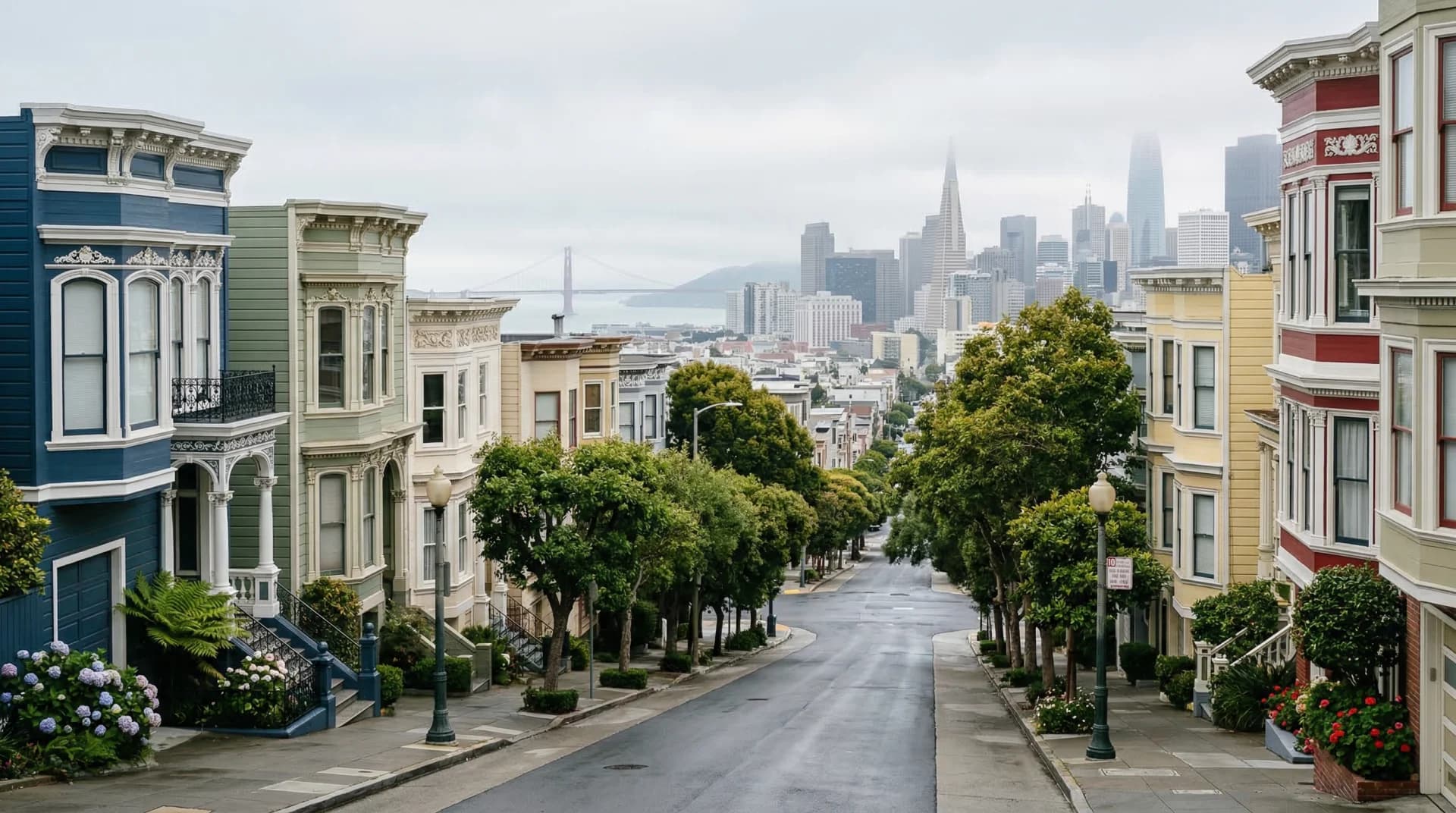
- San Francisco / Bay Area — Tech wealth seeking a warm-weather complement. Many buyers maintain primary residences in the Bay and use Palm Springs as a winter base.
- Seattle / Pacific Northwest — Growing rapidly. Buyers cite the sunshine differential as the primary motivator.
- Denver / Mountain West — Buyers seeking desert warmth as a counterpoint to mountain living.
Investment Considerations
Short-term rental regulations vary by city. Palm Springs proper has a well-established vacation rental ordinance (VR zone maps), while Indian Wells and Rancho Mirage restrict or prohibit short-term rentals in most residential areas. Buyers considering rental income should verify zoning before purchase.
Market Trends
The Coachella Valley luxury market has shown resilience through interest rate volatility. Key trends to watch:
- Inventory is tightening in the $2M–$5M segment, with absorption rates under 4 months in Indian Wells and Rancho Mirage
- New construction is limited by water allocation concerns and Coachella Valley Water District regulations, constraining future supply
- Mid-century modern properties continue to command premiums of 15–25% over comparably sized conventional homes — Modernism Week exposure has created a global buyer pool for these architectural gems
- The $1M–$1.5M segment remains the sweet spot for entry into the luxury market, particularly in La Quinta and Palm Desert where golf-course-adjacent properties offer strong value
The combination of constrained supply, persistent demand from California's coastal metros, and the valley's cultural momentum suggests continued appreciation in the 5–8% annual range for well-positioned properties.